The Short Answer
The Clorox Toilet Wand is a handle-and-disposable-head system. Snap on a cleaning head, scrub the bowl, then toss the head. That keeps hands away from the brush and removes the messy rinse-out step that comes with a traditional toilet brush.
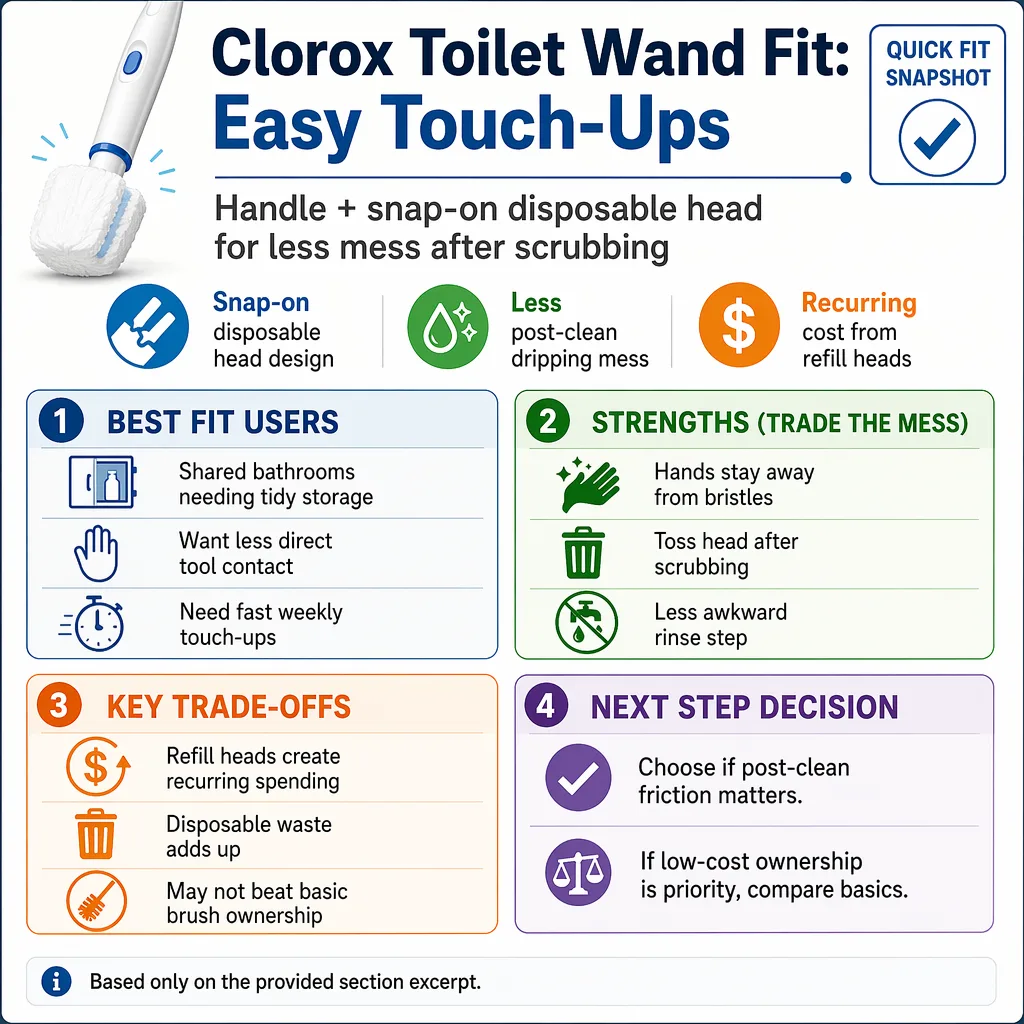
That setup solves a very specific pain point, the part after cleaning. A lot of people do not hate scrubbing the bowl, they hate what happens next: dripping bristles, a damp holder, and the awkward rinse in the sink or tub. This product attacks that friction directly.
Strong fit
- Fast weekly touch-ups
- Shared bathrooms that need a cleaner-looking storage setup
- Buyers who want less direct contact with the tool
Trade-off
- Refill heads create recurring spending
- Disposable waste adds up
- It does not beat a basic brush on low-cost ownership
Most guides treat disposable-head toilet wands as an automatic upgrade. That is wrong. The wand does not clean a toilet better by default, it lowers the barrier to cleaning. That difference matters in a busy house and matters even more in a small bathroom where the brush holder feels like clutter.
How We Judged It
This analysis centers on cleanup friction, storage, and the refill ecosystem. Those three things decide whether the wand earns its spot or turns into another bathroom accessory.
| Decision factor | Why it matters |
|---|---|
| Cleanup friction | If the tool feels gross to use or put away, the job gets postponed. |
| Storage | A caddy only helps if it fits the room without becoming visual clutter. |
| Refills | The real ownership cost sits in the disposable heads, not the handle. |
| Repeat use | Weekly maintenance rewards convenience far more than occasional deep scrubbing. |
That last point is the one shoppers miss. A toilet-cleaning system that gets used every week has a different value story from one that sits in the corner until a guest is coming over. The Clorox wand fits the first household better.
Where It Makes Sense
Best-fit scenario: a one-bathroom or two-bathroom home where the toilet gets quick maintenance cleaning on a regular schedule, and the brush storage area always feels like the grossest part of the job.
Small bathrooms with limited storage
The wand system makes sense when floor space and sightlines matter. A caddy with refill heads tucked away looks cleaner than an open brush holder with a damp brush head sitting in it. That visual difference matters in powder rooms and compact baths where every item stays in view.
The trade-off is obvious. The caddy hides the mess, but it also adds another object to store and keep stocked. If the bathroom already has a crowded cabinet, the convenience premium shrinks.
Shared bathrooms and guest baths
This product fits a bathroom that needs to look ready at a moment’s notice. Guest baths, family bathrooms, and powder rooms benefit from a tool that goes from shelf to bowl without a rinse ritual. Less contact also matters when multiple people share the same space and no one wants to be the person who rinses the brush.
That said, a guest bath that gets cleaned rarely does not justify much spend on refills. In that case, a simple brush stays the better value because it sits idle most of the time.
First-time buyers who want a simple routine
First-time homeowners often want a cleaning setup that works without explaining itself. The Clorox Toilet Wand does that. It is easy to understand, easy to store, and easy to grab when the bowl needs a quick scrub.
The catch is ownership discipline. If disposable heads are not on hand, the system stops being convenient. A traditional brush stays ready forever, which is the cleaner choice for buyers who want zero consumables to track.
Where the Claims Need Context
The big claim around this kind of wand is hygiene, and that claim needs context. Disposable heads reduce brush contact, but they do not erase the rest of the system. Refills, trash, and storage all become part of the cleaning loop.
Most guides praise disposable heads as the premium answer. That is incomplete. The premium is convenience, not lower total cost. A handle that lasts a long time does not make the system cheap if the heads keep getting replaced.
A few edge cases matter:
- Hard water stains and mineral rings: This wand is a maintenance tool first. Set-in buildup needs stronger cleaner, more dwell time, and sometimes a separate descaling product.
- Neglected toilets: A disposable head does not rescue a bowl that has been ignored for weeks. A traditional brush with a stronger cleaner handles that kind of job more directly.
- Trash and waste habits: Households that avoid disposable cleaning parts should skip this system. The waste stream is built into the design.
- Storage reality: A caddy hides the heads, but the caddy still occupies space. In a tiny bath, that storage footprint matters more than the marketing language.
The most practical misconception is that a disposable-head wand automatically means less maintenance overall. It does not. It swaps brush rinsing for refill management. That is a good deal only when the house values convenience enough to pay for it.
How It Compares With Alternatives
The cleanest comparison is against a basic toilet brush and holder. That is the real alternative most buyers are choosing between.
| Option | Best for | Main trade-off |
|---|---|---|
| Clorox Toilet Wand | Fast cleanup, less direct contact, tidier storage | Refill heads, disposable waste, higher ongoing ownership cost |
| Traditional toilet brush and holder | Low-cost ownership, low waste, simple replacement | More contact with the brush, rinsing and drying are still part of the job |
The Clorox wand wins on cleanup friction. The traditional brush wins on economy and waste. That is the real split.
A basic toilet brush is not an outdated pick. It is the better choice for budget-first buyers, low-use bathrooms, and anyone who wants the fewest recurring parts. The Clorox system is better for people who value a cleaner, quicker routine enough to accept ongoing refill purchases.
Where Clorox Toilet Wand Is Worth Paying For
The wand earns its keep when convenience changes behavior. That is the whole story. If the faster setup gets the toilet cleaned on schedule, the system pays for itself in time saved and annoyance avoided.
Pay for it if the real problem is reluctance
A lot of bathrooms do not need a fancier cleaner, they need a cleaner that feels easier to reach for. The Clorox wand does that job. The disposable head, handled caddy, and no-rinse cleanup reduce the number of steps between noticing grime and taking care of it.
That matters in homes where cleaning happens in short bursts. A grab-and-scrub system beats a tool that feels awkward to rinse, dry, and put away.
Pay for it if the bathroom needs to stay presentable
Guest baths, shared family baths, and small apartments benefit from a cleaner-looking tool setup. The wand hides the gross part better than a brush sitting in a holder. That visual payoff is real, and it shows up every time the bathroom door opens.
Skip the premium if refills feel like clutter
If consumables annoy you, this is the wrong lane. The wand turns a one-time brush purchase into a repeat buying pattern. That pattern is fine for convenience-first households and a bad fit for buyers who want one tool that lasts until it wears out.
Decision Checklist
Use this as the last pass before buying.
| Buy the Clorox Toilet Wand if... | Skip it if... |
|---|---|
| You want less contact with the brush and a cleaner-looking storage setup. | You want the lowest ongoing cost and the least waste. |
| You clean toilets on a regular schedule and want a fast grab-and-go tool. | You clean rarely and want one brush that stays ready forever. |
| Your bathroom is small, shared, or visually sensitive. | Your bathroom has plenty of storage and a standard brush does not bother you. |
| You want a simpler routine for a guest bath or family bath. | You expect one tool to handle heavy scale or neglected buildup without extra effort. |
If the buy side wins on three or four lines, the wand fits. If the skip side dominates, a traditional brush is the smarter purchase.
Bottom Line
Buy the Clorox Toilet Wand if convenience, cleaner storage, and less contact matter more than refill cost and disposable waste. That is the right call for guest baths, busy family bathrooms, and small spaces where a damp brush is the part everyone hates.
Skip it if your priority is the cheapest long-term cleaning setup or the lowest-waste routine. A standard toilet brush handles the same job with fewer consumables and less ownership friction. For economy-first households, that trade wins.
Frequently Asked Questions
Does the Clorox Toilet Wand replace a regular toilet brush?
Yes, for routine bowl cleaning. It replaces the everyday brush routine with disposable cleaning heads and a reusable handle. It does not replace stronger cleaners or descaling when the toilet has heavy buildup.
Are refill heads the main ongoing cost?
Yes. The handle is the starting point, but refill heads define the ownership cost over time. Buyers who want the lowest recurring spend should look at a traditional brush instead.
Is the Clorox Toilet Wand good for hard water stains?
No, not as the main solution. Hard water scale needs more cleaning power and more dwell time than a disposable head system usually gets on its own. A descaling cleaner and a traditional brush handle that job better.
Does it make sense for a small bathroom?
Yes, if a tidy caddy and quick cleanup matter. Small bathrooms reward tools that stay compact and do not leave a wet brush in plain view. It loses appeal if the caddy adds clutter in an already tight space.
Who should skip it entirely?
Households focused on low waste or the lowest possible recurring cost should skip it. A basic toilet brush gives the same cleaning function with fewer consumables and less maintenance around the tool itself.
See Also
If you are weighing this model, also compare it with Tramex Moisture Meter Review: What U.S. Homeowners Should Know Before They Buy, Milwaukee Stud Finder Review: How It Works and Why It Can Miss Studs, and Southwire Extension Cord Review: What to Know Before You Buy.
For broader context before you decide, CFL vs. LED Bulbs: Which Costs Less and Lasts Longer for Your Home? and Klein Tools ET310 Review: A No-Nonsense Circuit Breaker Finder help round out the trade-offs.