The gutter guard is a sensible buy for homes that fill gutters with leaves, but only when the gutter system itself is sound. The answer flips fast if the roof sheds heavy grit, the gutters sag, or the buyer expects a zero-maintenance fix. Most guides sell guards as a permanent solution, that is wrong because debris still lands on the top edge, in corners, and at downspouts. The real payoff is fewer ladder trips and less wet mess, not the end of gutter care.
Buyer Fit at a Glance
This is a cleanup product first and a convenience product second. It reduces the volume of sludge you scoop out and the gear you drag in and out of the garage, but it adds a surface that still needs attention.
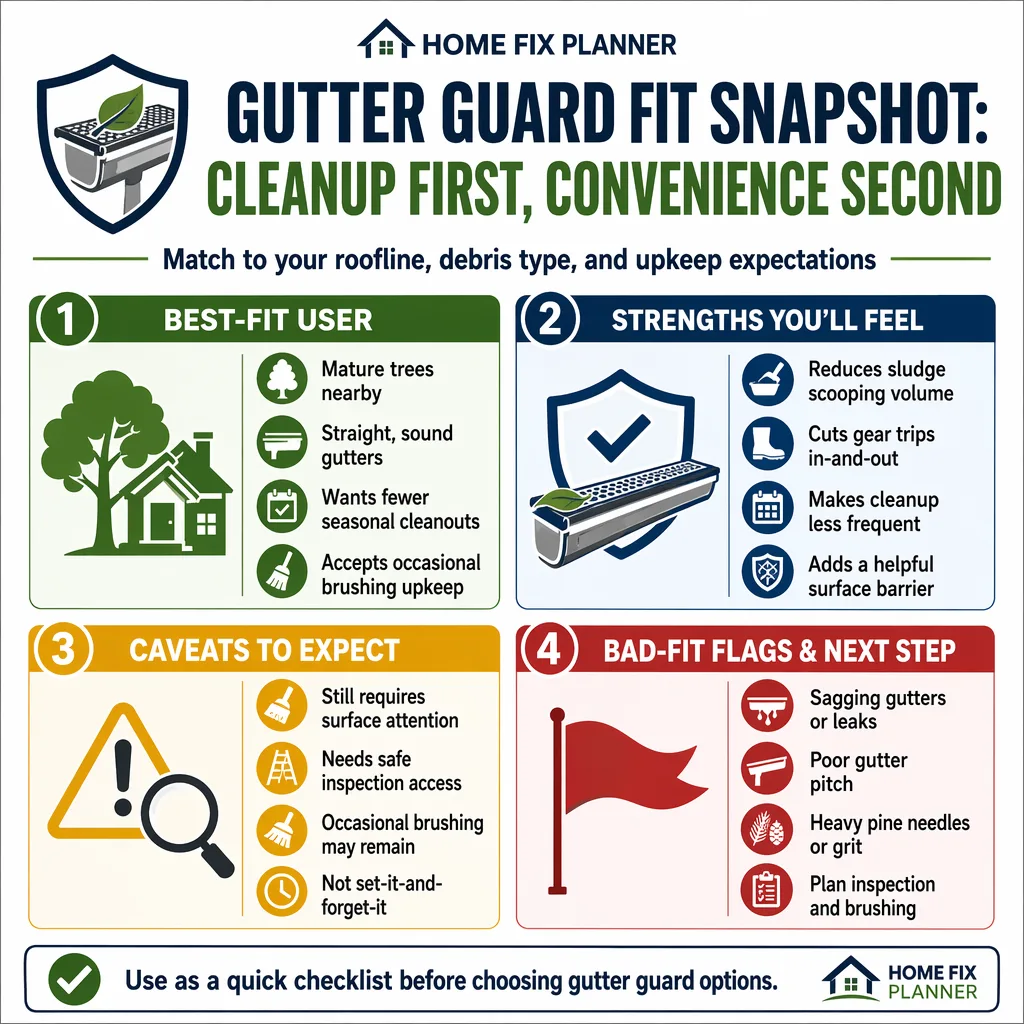
Best-fit scenario box
- Mature trees over a home with straight, sound gutters
- A homeowner who wants fewer seasonal cleanouts, not zero upkeep
- A roofline that still allows safe inspection and occasional brushing
Bad fit
- Sagging gutters, leaks, or poor pitch
- Heavy pine-needle or shingle-grit load
- A buyer who expects a permanent set-it-and-forget-it fix
Strengths
- Cuts wet leaf buildup inside the trough.
- Reduces ladder trips and the pile of cleanup gear that lives in storage.
- Fits best where the gutter run is already draining correctly.
Trade-offs
- The top surface still needs brushing or rinsing.
- Corners and downspouts stay problem spots.
- It does nothing for sagging gutters or bad pitch.
How We Framed the Decision
The useful question is not whether a gutter guard blocks debris in a brochure. The useful question is where the cleanup work lands after installation, and how often that work repeats.
Three things drive the answer: debris type, gutter health, and access. Large leaves are simple. Pine needles, shingle grit, seed pods, and roof dust are not. Roof valleys dump material into a few high-load spots, and that changes the maintenance story fast.
Cleanup burden sits first in the decision. Storage friction comes next. A guard that cuts how often you drag out the ladder, scoop, bucket, and hose earns more credit than a guard that only sounds impressive on paper.
Where It Makes Sense
Tree-heavy lots with sound gutters
This product fits homes under deciduous trees where the gutters already slope and drain the right way. It keeps the trough from turning into a wet leaf mat and cuts the number of full cleanouts.
The trade-off stays real. Debris still lands on the top edge after wind events, so the chore shifts from deep scooping to inspection and spot cleaning.
Homes where ladder time is the problem
If a second-story run sits over a steep grade, a deck, or a tight side yard, fewer gutter cleanouts matter a lot. The guard earns its keep by reducing the number of times tools get hauled up and down.
That benefit only holds when the roof edge is still serviceable. Hard access makes the remaining maintenance more annoying, so the product fits best when the reduced visits outweigh the new top-surface care.
Buyers who want cleaner seasonal cleanup
Some owners do not hate gutter work. They hate the mess. This product cuts the sludge factor, which means lighter bags, less grime on siding, and less cleanup gear spreading through the garage.
The catch is simple. The mess does not vanish, it moves. Instead of scooping wet debris from inside the gutter, the homeowner deals with brushing or rinsing the guard itself.
Where the Claims Need Context
Fine debris is the stress test
Most guides recommend the tightest screen possible. That is wrong because finer openings turn pine needles, shingle grit, seed pods, and roof dust into a crust on top. On lots with constant small debris, the guard stops being a simple barrier and becomes another surface to clean.
That matters more than the marketing language. A coarse leaf load looks easy. A fine-debris roofline makes even a good guard work harder.
Guard and gutter repair are not the same job
A guard does not fix sagging spans, loose hangers, bad pitch, or crushed downspouts. Put protection on a broken gutter and water still jumps the edge or pools in the wrong place.
This is the mistake buyers miss. They buy a guard to solve overflow, then discover the gutter itself was the problem all along. Fix the gutter first, then add the guard.
Replacement parts matter
If a system depends on specialty clips, corner pieces, or end caps, replacement availability matters before purchase. A missing part turns a small maintenance job into a brand hunt.
That is the hidden ownership friction. The cheap part nobody thinks about often becomes the part that delays the whole repair.
Where Gutter Guard Is Worth Paying For
Paying more makes sense only when the upgrade buys back repeat labor. If the premium still leaves the homeowner brushing the top surface after every storm, the extra cost belongs elsewhere.
Pay more for hard-to-reach runs
Steep roof edges, long rear gutters, and awkward two-story sections justify a better guard. Every avoided ladder session matters more when staging the job is a headache.
That is where the value shows up. The upgrade changes the routine from frequent cleanouts to occasional checks, which is the real convenience gain.
Stay basic when debris pressure is light
If the house drops only a modest leaf load and the gutters are easy to reach, a basic screen or a scheduled cleanout plan does the job. A higher-end system adds more surface to maintain without enough payoff.
This is the wrong place to overspend. A premium guard that does not reduce actual work loses to a cheaper setup with a simple maintenance routine.
How It Compares With Alternatives
A gutter guard beats the cheapest screening when cleanup time matters. It loses to a better-fitted fine-mesh system when the yard sheds tiny debris nonstop, and it loses to no guard at all when the home barely clogs.
| Option | Best fit | Main downside |
|---|---|---|
| gutter guard | Homes with regular leaf drop and sound gutters | The top surface still needs cleaning |
| Basic aluminum screen | Budget-first buyers with lighter debris loads | Fine debris slips through faster |
| Fine-mesh guard | Pine needles, seed pods, and small debris | More brushing on the top edge |
| No guard, planned cleanouts | Light debris loads and easy access | Highest ladder time and mess |
Compared with a basic screen, this product wins when the goal is less mess inside the gutter and fewer cleanup tools moving through the house. Compared with a finer mesh system, it wins only when debris is coarse enough that the top surface stays manageable. The cheapest route still wins when the roofline is easy and the gutters stay clear most of the year.
Decision Checklist
Check these boxes before buying:
- Gutters clog from leaves, seed pods, or roof grit.
- The gutter run is secure and pitched correctly.
- You still plan to inspect and brush the top surface after storms.
- Roof access stays safe enough for occasional service.
- Replacement clips or corner pieces are easy to source if the system uses them.
- You want fewer cleanouts, not a permanent seal.
If the first two boxes stay empty, fix the gutter system first. A guard on a bad gutter just covers a bigger problem.
Final Buyer-Fit Read
Buy gutter guard if the home fills with leaves, the gutters already drain correctly, and the goal is to cut messy cleanouts. It delivers its value by reducing ladder trips and keeping the trough from turning into a sludge channel.
Skip it if the gutters sag, the roof throws heavy pine needles or shingle grit, or the buyer expects a no-touch solution. In those cases, the system needs repair, a finer guard, or a different maintenance plan before protection makes sense. The right purchase lowers maintenance friction. The wrong one adds another surface to service.
FAQ
Does gutter guard stop gutter cleaning completely?
No. It reduces the material inside the gutter, but the top edge, corners, and downspouts still need attention.
Is gutter guard worth it on a one-story house?
Yes, when debris load makes cleanouts frequent. A light-debris one-story roof with easy ladder access works fine with cheaper screening or a simple cleanout plan.
What debris gives gutter guards the most trouble?
Pine needles, shingle grit, seed pods, and small leaf fragments. Those materials build a top layer that needs brushing or rinsing.
Should sagging gutters get a guard first?
No. Sagging, leaks, bad pitch, and crushed downspouts need repair before any guard goes on.
What is the biggest mistake buyers make?
Expecting zero maintenance. A gutter guard cuts the cleanup load, but it does not erase upkeep.
See Also
If you are weighing this model, also compare it with Tramex Moisture Meter Review: What U.S. Homeowners Should Know Before They Buy, Milwaukee Stud Finder Review: How It Works and Why It Can Miss Studs, and Husky 26 Gallon Air Compressor Review: What to Know Before You Buy.
For broader context before you decide, Fluorescent vs LED Lights: Cost, Maintenance, and Home Fit and Klein Tools ET310 Review: A No-Nonsense Circuit Breaker Finder help round out the trade-offs.