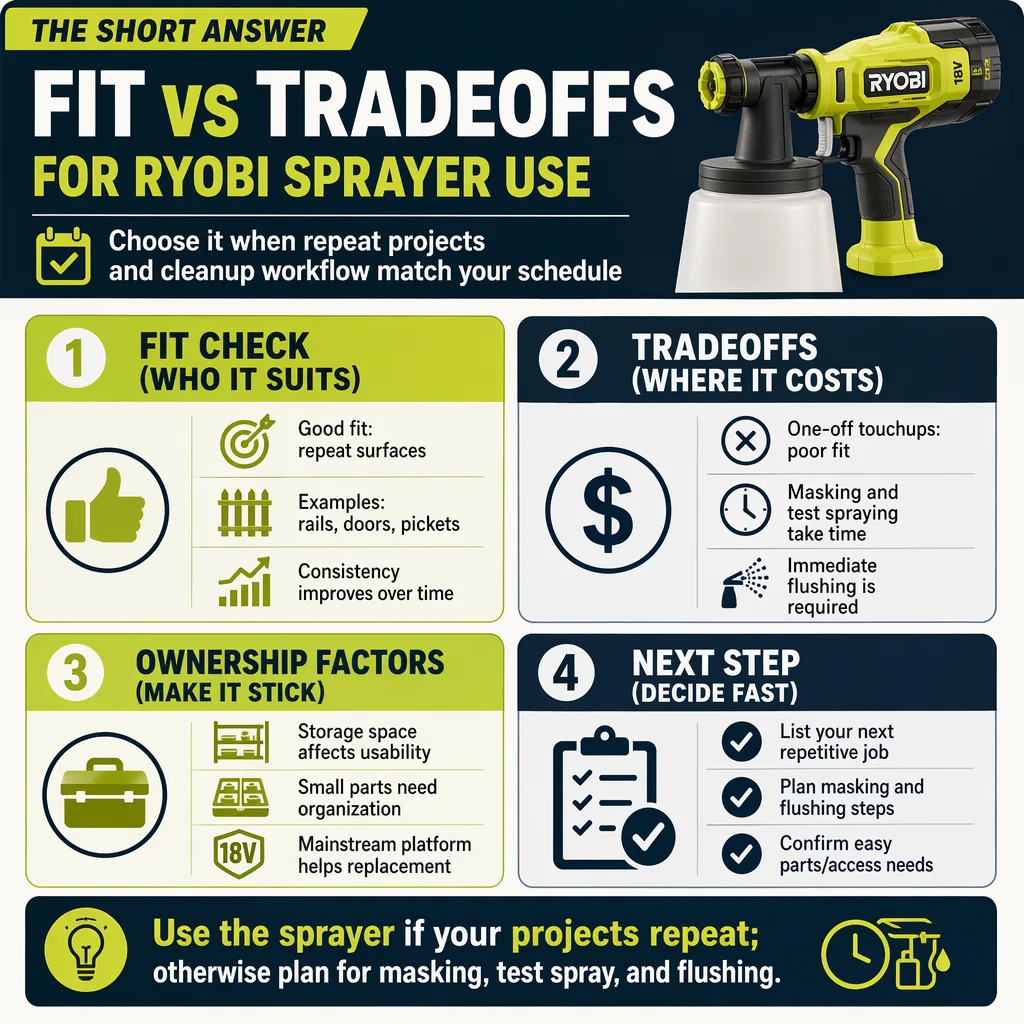
The Ryobi paint sprayer is a sensible buy for homeowners who want faster coverage on cabinets, fences, furniture, and other repeat paint jobs, but cleanup and storage discipline decide whether it feels smart or annoying. The answer flips fast if this is a one-off project, if the job is trim-heavy, or if the sprayer will sit on a shelf for long stretches between uses. It also changes if the finish needs tight control and low overspray, because a sprayer adds masking and setup that a brush never asks for.
The Short Answer
| Fit question | Quick answer | Why it matters |
|---|---|---|
| Repeat projects | Good fit | Cleanup makes more sense when the tool gets used again and again. |
| One-off touchups | Poor fit | Masking, test spraying, and flushing eat the time saved by spraying. |
| Storage space | Mixed fit | Small parts need a dry, organized home or they become a nuisance. |
| Finish control | Mixed fit | Sprayers reward prep and punish rushed setups. |
Why it earns attention
This tool makes the most sense when the same surfaces show up over and over, cabinet doors, porch railings, fence pickets, patio furniture, and other broad, repetitive jobs. Speed is real on those projects, but the bigger value is consistency when the tool gets pulled out again in a month or two.
A mainstream brand matters here. The less obscure the platform, the easier it is to find wear items and accessories later, which keeps the sprayer from becoming dead weight over a missing filter or seal. That is a real ownership advantage, not a brochure talking point.
Where it falls short
The hidden work shifts from brushing to prep and cleanup. Overspray control, masking, and immediate flushing are part of the job, not optional extras, and they erase the fantasy that a sprayer is always faster.
Small repair jobs expose the weak side fast. If the paint area is tiny and the room is full of trim, furniture, or fixtures, the masking perimeter grows bigger than the painting itself. That is where a roller or brush wins cleanly.
What This Analysis Is Based On
The exact Ryobi sprayer listing matters more than the badge on the body. Ryobi sells different paint-sprayer formats across its lineup, and the package details decide whether the tool feels like a useful weekend helper or a storage headache.
This read focuses on buyer-fit, cleanup friction, parts support, and how the sprayer changes the whole project workflow. That matters because a paint sprayer is not just a nozzle and a trigger, it is a system. You need a place to keep the cup, seals, tips, filters, and cleaning pieces together, or the next job starts with a scavenger hunt.
If the listing leaves out the pieces that affect routine use, that omission matters. A buyer should verify the exact sprayer type, what comes in the box, what coatings it handles, and how much disassembly is required after each session. Those details control the real ownership burden far more than the marketing language does.
Where It Makes Sense
Best-fit scenario box
Best fit
- Cabinet doors and furniture with repeat coats
- Fence and railing work where coverage speed matters
- Homeowners who paint more than once a year
- Buyers who accept masking and immediate cleanup as part of the plan
Skip it
- Tiny trim touchups
- One-and-done wall patches
- Storage-challenged garages and crowded utility shelves
- Anyone who wants the shortest possible cleanup routine
The Ryobi paint sprayer belongs in a house where projects repeat. That is the cleanest line in the sand. A sprayer that comes out monthly or seasonally gets more forgiving economics because the setup routine becomes familiar and the tool earns its shelf space.
Weekly or frequent use also changes the accessory story. A buyer who actually rotates through projects notices missing parts faster and uses replacement wear items before they become a problem. That is where a mainstream brand earns real points, because a sprayer with easier parts access stays useful longer than a bargain unit with a dead-end accessory path.
Storage is the other big divider. A sprayer does not like being tossed into a corner with half-dry residue and loose pieces rattling around in a box. It wants a bin, a label, and a drying spot. Buyers who already keep small tools organized will feel that friction less than buyers who treat paint gear like disposable junk drawers.
Where the Claims Need Context
Most guides treat a paint sprayer as a straight speed upgrade. That is wrong. The sprayer saves time only when masking, testing, cleanup, and storage stay under control. Leave any one of those out and the project turns sloppy fast.
Common mistake: buying a sprayer to avoid prep. That trade makes no sense. A sprayer swaps brush marks for overspray management, surface protection, and a cleanup routine that starts the minute the last pass is done. If that sounds annoying, a brush and roller remain the smarter move.
What to verify before buying:
- The exact sprayer format, because the package decides how easy it is to handle.
- Included accessories, because missing pieces turn a convenient tool into a parts chase.
- Cleaning steps, because a sprayer with awkward disassembly loses its main advantage.
- Replacement wear parts, because filters, seals, and cups matter after the first project.
- Storage footprint, because small parts need a dedicated home.
The cleanup reality is the real trade-off here. A sprayer lets paint land quickly, but it also leaves more surfaces to protect, more edges to tape, and more pieces to rinse. That is why this type of tool fits homeowners who plan the whole job, not just the painting part.
Where Ryobi Paint Sprayer Is Worth Paying For
This is worth paying for when the sprayer replaces repeated labor, not when it avoids one afternoon of brush work. The value shows up on surfaces that repeat across the house, the fence, the porch, the garage, and the furniture pieces that all need the same kind of coverage.
It also makes sense when the buyer wants a mainstream parts trail. That matters more than glossy spray claims because wear items decide whether the tool still feels ready next season. A cracked cup or missing seal should be a nuisance, not the end of the sprayer’s useful life.
Paying up for this kind of tool does not make sense for one-off room touchups. In those jobs, the masking area grows, the cleanup tax stays fixed, and the time saved on paint application disappears into setup. A brush and roller win those jobs because they leave less mess behind and store more cleanly.
How It Compares With Alternatives
| Option | Best for | Main trade-off |
|---|---|---|
| Ryobi paint sprayer | Repeat cabinet, fence, furniture, and railing projects | Cleanup and overspray control demand discipline |
| Brush and roller | Small rooms, trim-heavy jobs, quick touchups | Slower on broad flat surfaces |
| Basic low-cost sprayer | Single-project bargain hunting | Accessory support and parts access decide whether it stays usable |
Against a brush and roller, the Ryobi wins on repeated coverage and loses on simplicity. That is the whole story in one line. If the project list includes fences, cabinets, or other broad surfaces, the sprayer earns a look. If the work is mostly trim or tiny patches, the roller stays cleaner and faster overall.
Against a cheaper sprayer, the main question is support, not just the sticker. A bargain unit that lacks replacement parts or easy disassembly turns into clutter fast. That is why the Ryobi makes more sense for a homeowner who wants a tool that stays in the rotation instead of one that gets regretted after the first cleanup.
Decision Checklist
Use this before checkout:
- You paint similar surfaces more than once a year.
- You have room for masking, drying, and cleanup.
- You are willing to keep small parts organized in one place.
- You plan to verify replacement parts and accessories before buying.
- You accept overspray control as part of the project, not as an afterthought.
If two or more of those answers are no, skip the sprayer and stick with a brush-and-roller setup. That route costs less in setup, takes less space, and causes fewer storage headaches.
Bottom Line
Buy the Ryobi paint sprayer if repeated paint projects are part of the plan and cleanup gets treated as part of the tool, not a punishment after the job. Skip it if the next project is a one-off and the main goal is to avoid brush strokes, because the extra masking and rinsing remove too much of the advantage.
For homeowners who want speed, repeatability, and a mainstream parts trail, this model fits. For anyone who wants the shortest path from tape to finished wall, a brush and roller stay the better call.
Frequently Asked Questions
Is the Ryobi paint sprayer a good choice for cabinets?
Yes, it fits cabinet doors and flat furniture pieces well when masking space and cleanup time are part of the plan. It loses appeal fast in tight kitchens or crowded rooms where overspray control becomes the real project.
What extra supplies belong in the budget with a paint sprayer?
Masking paper, painter’s tape, drop cloths, cleaning supplies, and a dedicated spot for drying parts belong in the plan. A sprayer without those supports shifts the burden to the user and turns convenience into cleanup.
Does this make sense for occasional weekend use?
Yes, if the weekend jobs repeat and the same surfaces come up again. No, if it sits unused for long stretches and comes out only for emergency touchups, because the cleanup routine becomes a drag instead of a habit.
What should be checked on the listing before buying?
Check the exact sprayer format, the included accessories, the cleanup steps, and the availability of replacement wear parts. Those details decide whether the tool stays useful after the first project.
Is a brush and roller still the better option for some jobs?
Yes, especially for trim-heavy rooms, tiny repairs, and any project where masking takes longer than painting. The roller wins on simplicity, storage, and cleanup, which matters more than spray speed on small jobs.
See Also
If you are weighing this model, also compare it with Milwaukee Stud Finder Review: How It Works and Why It Can Miss Studs, Tacklife Stud Finder Review: What It Does Well and Its Trade-Offs, and Worx Cordless Drill Review: What to Know Before You Buy.
For broader context before you decide, Deck Staining vs Painting: Costs, Durability, and Maintenance for Homeowners and Klein Tools ET310 Review: A No-Nonsense Circuit Breaker Finder help round out the trade-offs.