Start With the Main Constraint
Start with the wettest room and the drain route. Square footage comes second.
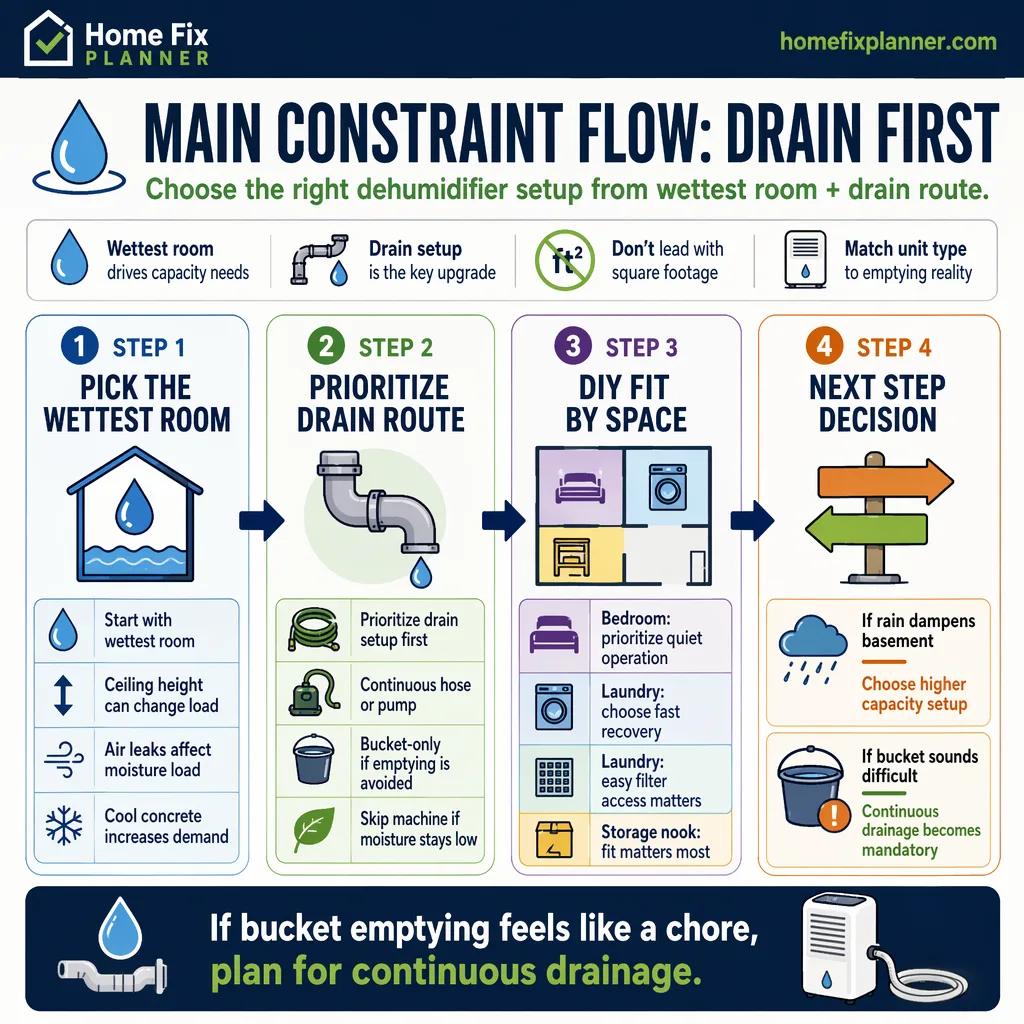
Most guides start with room size alone. That is wrong because ceiling height, air leaks, storm moisture, and cool concrete change the load more than the floor plan does.
| Space or problem | Prioritize | Drain setup | Avoid |
|---|---|---|---|
| Damp basement after rain | Higher capacity, auto-defrost, washable filter | Continuous hose or pump | Bucket-only if emptying gets skipped |
| Bedroom or nursery | Quiet operation, compact footprint, simple controls | Manual bucket or nearby drain | Loud cabinet units |
| Laundry room | Fast recovery, easy filter access, sturdy wheels | Drain line nearby | Hard-to-store oversized boxes |
| Closet or storage nook | Passive absorber or small unit | No machine if moisture stays low | Full-size machine for a tiny job |
A 900-square-foot basement with damp concrete asks more from a machine than a 900-square-foot upstairs bonus room. If emptying a bucket already sounds like a chore, continuous drainage is not an upgrade, it is the main reason to buy.
Rule of thumb: above 55% RH most days, start with capacity and drain access first. At 45% to 55% with short spikes, quiet operation and easy emptying matter more. Below 45% most of the time, fix ventilation or the moisture source first.
The Comparison Points That Actually Matter
Capacity, drainage, noise, and service access separate a smart buy from a future nuisance.
Capacity class
Pint ratings use controlled test conditions. They set a rough ceiling on removal, not a promise that the same result shows up in a cold basement or a laundry room.
A 20- to 30-pint class fits small rooms and short damp spikes. A 50-pint class fits recurring basement moisture, laundry duty, and rooms with condensation.
Drainage
Bucket-only works when the unit sits close by and someone empties it on schedule. Continuous drain wins for weekly use.
A pump matters when gravity does not reach the drain or the machine sits below the outlet. Without that path, the bucket turns into the real maintenance schedule.
Noise and placement
A bedroom or office unit lives or dies on sound and vibration. The louder cabinet belongs in a basement, utility room, or garage, not beside a bed.
Filter and parts access
Easy-to-rinse filters, standard hoses, and a bucket with a real handle cut weekly friction. If the replacement parts look proprietary or rare, skip the unit.
If two options tie, choose the one with the cleaner drain path and easier storage. That saves more frustration than a small bump in labeled capacity.
The Trade-Off to Weigh
Convenience costs either money up front or time every week.
Manual bucket use keeps the setup simple, but it turns into a routine chore fast. Continuous drain or pump setup removes that chore, but it adds hose routing, space planning, and one more part to inspect.
Most guides push the biggest pint rating. That is wrong because oversizing short-cycles in cool rooms, raises noise, and leaves you carrying a larger box that stores badly.
Choose the simpler setup when the room runs only after storms or humid spells. Choose the easier drain path when the machine sits in a damp basement, near laundry equipment, or anywhere daily attention disappears.
Where Dehumidifier Is Worth Paying For
Pay more only when the extra cost removes weekly labor or solves placement limits.
Built-in pumps matter when a floor drain sits away from the unit or above it. Better casters and handles matter when the machine moves between floors or into storage every season.
A washable filter and easy bucket access matter for weekly use because cleanup becomes the habit you actually keep. Auto-defrost matters in cool basements, where frost on the coil stops moisture removal until the unit thaws.
Smart controls do not empty the bucket. App control sits last on the list, after drain setup, noise, and maintenance access.
The Use-Case Map
Match the machine to the moisture pattern, not the square footage label.
A basement with seepage after rain needs capacity, continuous drainage, and a real plan for the water source. If a crack or leak is feeding the problem, fix that first or the machine just works harder.
A laundry room needs quick recovery after wash cycles and easy filter access because lint builds fast. A bedroom needs quiet operation and a footprint that does not dominate the room. A crawlspace needs low-clearance fit, drain routing, and service access that does not turn maintenance into a crawl.
For a closet or storage nook, a passive moisture absorber or better ventilation beats a full-size machine. That cheaper option stores easily and avoids hauling a heavy appliance for a tiny job.
Upkeep to Plan For
The maintenance routine decides whether the unit feels worth owning.
Bucket emptying or drain checks happen weekly in a machine that sees regular use. Filters need attention every few weeks in dusty spaces, and the intake needs a wipe before the buildup slows airflow.
A clean bucket does not mean a clean coil. Dust hides on the intake and makes the unit run longer for the same result, which raises the labor you pay in electricity and cleaning time.
Before seasonal storage, empty the tank, dry the machine, and wrap the hose neatly if one stays attached. Standard replacement filters and hoses matter here, because a good machine with hard-to-find parts becomes a future headache.
Published Details Worth Checking
Fit details beat flashy controls.
Measure the unit, the doorway, and the corner where it will sit. A dehumidifier that blocks a hallway or sits too close to a wall loses airflow and becomes annoying on day one.
Check drain port location, hose routing, and pump lift height if the unit uses a pump. In cool basements, confirm auto-defrost or frost protection so the coil does not freeze up during long runs.
Full-bucket shutoff is not a bonus. It protects the room from overflow when someone forgets the bucket or the drain line slips loose.
When Another Option Makes More Sense
Do not buy a dehumidifier for the wrong moisture problem.
Standing water, a leaking pipe, or a wet foundation wall needs repair first. A dehumidifier does not fix active water intrusion, and it turns into a bandage when the real fix is structural or plumbing work.
A bathroom steam problem belongs to an exhaust fan before it belongs to a dehumidifier. A closet with mild dampness belongs to a passive absorber before it belongs to a full appliance.
If a hygrometer already sits near 45% and the room feels comfortable, stop. Adding another machine just adds clutter and cleanup.
Final Buying Checklist
Use this before any purchase.
- Measure humidity in the problem room at more than one time of day.
- Decide whether the unit drains to a hose, a bucket, or a pump.
- Confirm where the machine will live and where it will go for storage.
- Check whether the room needs quiet operation or accepts more sound.
- Verify that filters, hoses, and other parts are easy to source.
- Make sure the unit fits doors, stairs, and the target corner with room to spare.
- Decide now whether you will keep up with weekly cleanup. If not, choose a simpler setup or skip the purchase.
Mistakes That Cost You Later
The expensive mistakes are the boring ones.
Buying by square footage alone leads to the wrong size and the wrong setup.
Ignoring cool-room performance leaves a basement under-dried and a tank that fills too fast.
Choosing bucket-only for daily use turns the machine into a chore, then a neglected corner item.
Treating noise as a minor issue backfires in bedrooms and offices.
Blocking intake or exhaust with furniture makes the unit work harder and sound worse.
Thinking a full bucket is the only maintenance that matters is another miss. The filter and coil decide whether the machine keeps pulling its weight.
Decision Recap
Buy for the wettest room, the drain path, and the cleanup burden.
A damp basement with a drain line wants capacity, continuous drainage, and easy filter access.
A bedroom or guest room wants quiet operation, compact storage, and a simple bucket routine.
A tiny closet or storage nook wants a passive absorber or no machine at all.
The right dehumidifier is the one that fits the room and the upkeep you will actually keep.
Frequently Asked Questions
What humidity setting should I use?
45% RH is the clean starting point. Move toward 40% if condensation keeps showing up on windows or walls, and do not chase a much drier room unless you have a specific reason.
Is a hose better than a bucket?
A hose wins for any room that sees regular moisture or sits far from the sink. A bucket works only when the unit sits close by and someone empties it on schedule.
How big should a basement dehumidifier be?
A basement that stays damp starts in the 50-pint class. Smaller rooms with short damp spikes fit smaller classes, but drainage and placement still matter more than the label alone.
Do I still need one if I already run AC?
Yes, if the problem space is a basement, crawlspace, laundry room, or another area the AC does not control well. AC helps while it runs, but it does not solve every moisture problem.
How often should I clean it?
Check the bucket and drain weekly, clean the filter every few weeks in dusty spaces, and dry the machine before storage. Odor, slime, or slower drying means cleanup already fell behind.
See Also
If you want to move from general advice into actual product choices, start with Honeywell Designer Series Humidifier Review: Who It's Best For, and How to Choose the Right Fit, Honeywell 30 Pint Dehumidifier Review: Who It's Best for, and Ladder Buying Guide for Homeowners: What to Check for Safe Repairs and Maintenance.
For a wider picture after the basics, Fiberglass Door vs. Steel Door: Costs, Repairs, and Maintenance Compared and Klein Tools ET310 Review: A No-Nonsense Circuit Breaker Finder are the next places to read.