Quick Buyer Summary
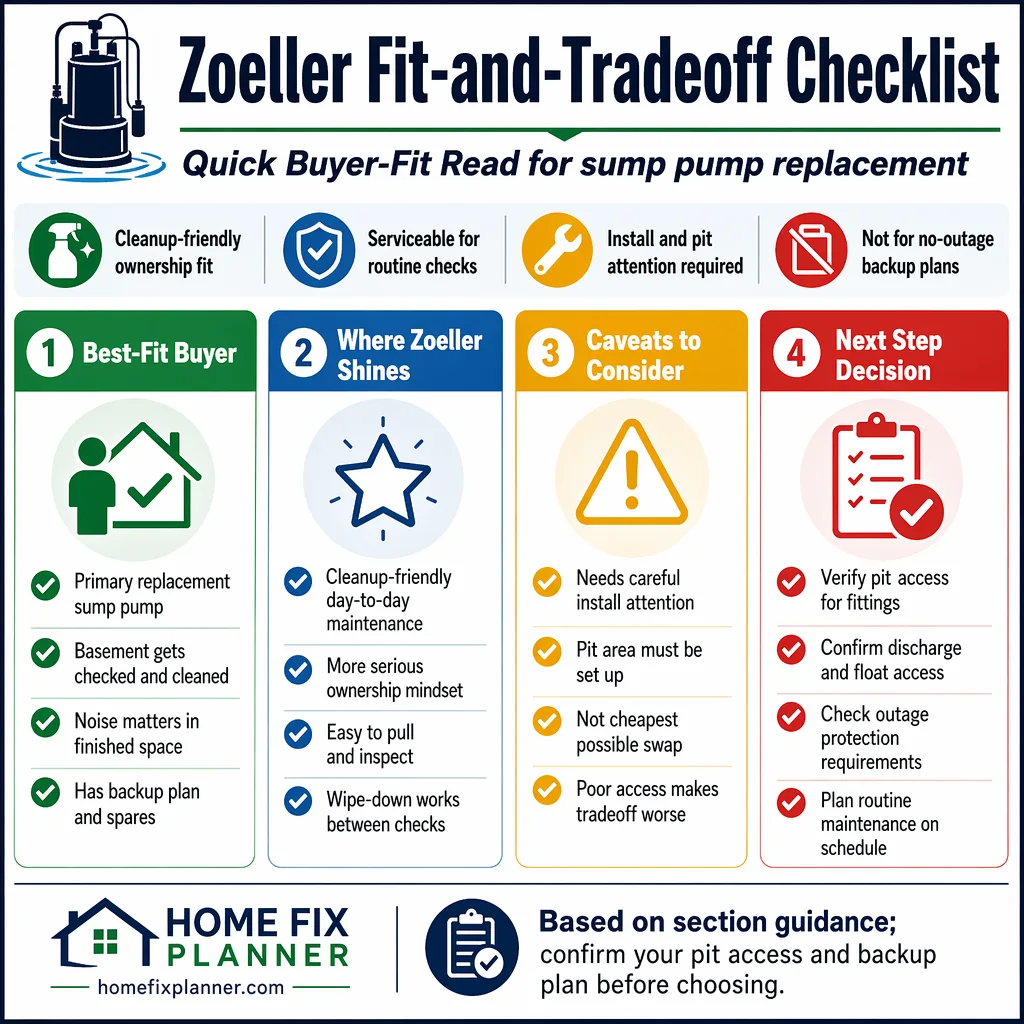
Best fit
- Primary sump pump replacement in a basement that gets checked and cleaned
- Finished or partly finished spaces where noise matters
- Homeowners who keep a backup plan, spare fittings, and routine maintenance on schedule
Not best fit
- Cheapest possible swap
- Tight pits with poor access to the float and discharge fittings
- Homes that still need outage protection but have no battery backup plan
The trade-off is plain. Zoeller asks for more attention to the install and the pit around it, and that extra attention pays off only when the rest of the system is set up correctly. A pump that is easy to pull, inspect, and wipe down beats a bargain unit that turns every check into a soaked mess.
What This Analysis Is Based On
This product analysis weighs fit, cleanup friction, replacement parts, and backup readiness. That is the right lens because sump pump ownership is about inspection, cleanup, and restart after a storm, not just moving water once.
Most guides obsess over horsepower. That is the wrong starting point because horsepower does nothing for a bad basin fit, a messy pit, or a missing backup plan. A pump that outruns the basin creates more cycling, more noise, and more wear on the surrounding plumbing.
The practical questions are simpler:
- Does the pit leave room to lift the pump out cleanly?
- Does the discharge path stay reasonable, without a weird climb or extra bends?
- Does the basement need a battery backup system for outages?
- Does the space tolerate pump noise?
- Are replacement fittings and accessories easy to source?
That lens matters more for first-time buyers than any headline spec. The real ownership cost sits in cleanup, access, and the parts that keep the system easy to service.
Where It Makes Sense
Zoeller fits best in homes that treat the sump pit as a working part of the house. The line makes the most sense where the buyer wants a primary pump, not a drama machine.
| Basement problem | Zoeller setup that fits best | Why it fits | Trade-off |
|---|---|---|---|
| Finished basement near living space | Quieter submersible-style setup | Noise stays lower and the pump stays out of sight | Service access takes more effort during cleanup |
| Utility space with easy pit access | More service-friendly Zoeller setup | Inspection and pit cleaning stay simple | Accessibility matters less if the install is already cramped |
| Pit that collects grit, sludge, or rust flakes | Primary pump with a cleanable pit and accessible float | Cleanup access matters as much as pumping power | Requires routine attention instead of a set-it-and-forget-it mindset |
| Storm-prone home with outages | Zoeller primary pump plus battery backup system | Primary flow and outage protection stay separate | Extra cost and more parts to maintain |
| Straight replacement for an older pump | Zoeller if the existing discharge layout stays standard | Cleaner swap, less plumbing improvisation | Not the lowest upfront-cost path |
Zoeller makes the strongest case when the pit gets checked more than once a year and the discharge route already works. If the install leaves room for cleanup, the pump earns its keep. If the pit is a cramped hole with bad access, the ownership friction rises fast.
Where the Claims Need Context
Horsepower is not the decision
A bigger number does not fix a bad layout. If the basin is shallow, the discharge run is long, or the float has little room, a stronger pump just cycles harder and adds noise. That creates a false sense of performance while the plumbing setup still controls the result.
Cleanup is part of ownership
Sediment, rust, and grit collect in sump pits. A pump that is awkward to lift turns a ten-minute check into a full cleanup project. The buyer who values easy service access, a removable lid, and simple coupler access gets more long-term value than the buyer chasing a bigger motor badge.
What to verify before buying
Check these before checkout:
- Basin size leaves room to lift the pump without scraping the sides
- Discharge height and route stay straightforward
- Backup power exists if outages hit during storms
- Noise tolerance matches the room where the pump sits
- Check valve, unions, and discharge fittings match the existing plumbing
- Replacement floats and accessories are easy to source
One common mistake stands out. Buyers focus on the pump and ignore the pit. That is wrong because the pit is where clogs, debris, and cleaning friction live.
How It Compares With Alternatives
Zoeller sits in a sturdier, maintenance-first lane than a basic budget replacement. That matters for homeowners who want the sump system to feel like part of the house, not a temporary fix.
| Option | Best for | Trade-off |
|---|---|---|
| Zoeller sump pump | Primary pump buyers who want better service access and a quieter finished-space fit | Costs more than the bare-minimum replacement path, and it still needs a backup plan in outage-prone homes |
| Wayne sump pump | Price-first replacements in simple, easy-access pits | Less attractive when cleanup access, parts planning, and long-term service matter more than the lowest bill |
| Battery backup system | Homes that lose power during storms | Solves outage protection, not primary pumping by itself |
Pick Wayne for a straight swap in a dry basement where cost leads and the pit is easy to reach. Pick Zoeller when the install gets used, checked, and cleaned, and the buyer wants a better maintenance story. Pick a battery backup system when power loss is part of the problem, because the primary pump alone does not cover that risk.
The Next Step After Narrowing Zoeller Sump Pump
Once Zoeller is on the shortlist, the next purchase is the support kit. The hidden friction sits in the accessories and the cleanup bin, not the carton.
Build the pit service kit around the pump:
- Matching check valve
- Proper couplings or union for fast removal
- Discharge fittings that match the existing line
- Basin cover that keeps debris out
- Battery backup or alarm if outages are part of the problem
- Labeled storage tote for spare parts, pipe sizes, and old measurements
That storage piece matters more than it sounds. When the next replacement comes due, having the fittings, measurements, and part notes in one dry bin cuts the job down fast.
Simple post-install test checklist
- Fill the pit until the float triggers
- Confirm the pump shuts off cleanly
- Watch the discharge outlet for a steady stream
- Listen for chatter, rubbing, or rapid cycling
- Check the pit for leftover debris after the first run
- Confirm water exits where it should, not near the foundation
If the test shows backflow, short cycling, or a clogged outlet, fix the plumbing before closing the pit. The pump does not get the last word if the discharge path is wrong.
Decision Checklist
Use this as the last filter before you buy:
- Basin size: There is room to lift the pump and clean around the float.
- Discharge height: The line stays simple and the route does not fight the pump.
- Power backup: A battery backup plan already exists, or storm outages are rare.
- Noise tolerance: The basement location tolerates more sound, or the setup is submersible-style.
- Maintenance habit: The home gets regular pit cleanup and part checks.
- Budget fit: The goal is a better primary pump, not the lowest-price box.
If two or more of those answers are no, Zoeller loses ground fast. A cheaper Wayne replacement or a primary-plus-backup setup fits better.
Decision Takeaway
Buy Zoeller if the basement needs a primary pump that gets maintained, the pit has workable access, and the homeowner values quieter, cleaner ownership over the cheapest sticker. That is the strong fit.
Skip Zoeller if the only goal is the lowest upfront cost or if the home still needs a backup power plan. In that case, a basic Wayne pump or a pump-plus-backup setup makes more sense. The reason is simple, Zoeller solves the primary pumping job, not every basement risk around it.
FAQ
Is Zoeller a good choice for a finished basement?
Yes. Finished basements favor quieter submersible-style setups and a more polished install. The trade-off is service access, because a tighter, cleaner-looking setup takes more effort to inspect and clean.
Do you still need a battery backup with a Zoeller sump pump?
Yes, if storms knock out power. Zoeller handles the primary pumping job, and a battery backup system handles the outage problem. One does not replace the other.
What do buyers miss most with sump pump shopping?
They miss basin room and discharge layout. A pump that looks strong on paper fails the buying test if the pit is cramped, the float has no clearance, or the discharge line turns the install into a mess.
Is Zoeller better than a basic Wayne pump?
Zoeller fits better when service access, cleanup, and a more maintenance-friendly ownership setup matter. Wayne fits better when the job is a simple, low-cost replacement in an easy pit. That is the clean split.
What should I check before sealing the pit?
Check the float movement, discharge flow, backflow at the check valve, and cleanup access around the pump. Seal the pit only after the system runs cleanly and the outlet sends water where it should.
See Also
If you are weighing this model, also compare it with Tramex Moisture Meter Review: What U.S. Homeowners Should Know Before They Buy, Milwaukee Stud Finder Review: How It Works and Why It Can Miss Studs, and Ryobi Brushless Circular Saw Review: Key Features, Performance, and What to Consider Before You Buy.
For broader context before you decide, Breaker Box vs. Fuse Box: Which Should You Choose? and Klein Tools ET310 Review: A No-Nonsense Circuit Breaker Finder help round out the trade-offs.