Start With the Main Constraint
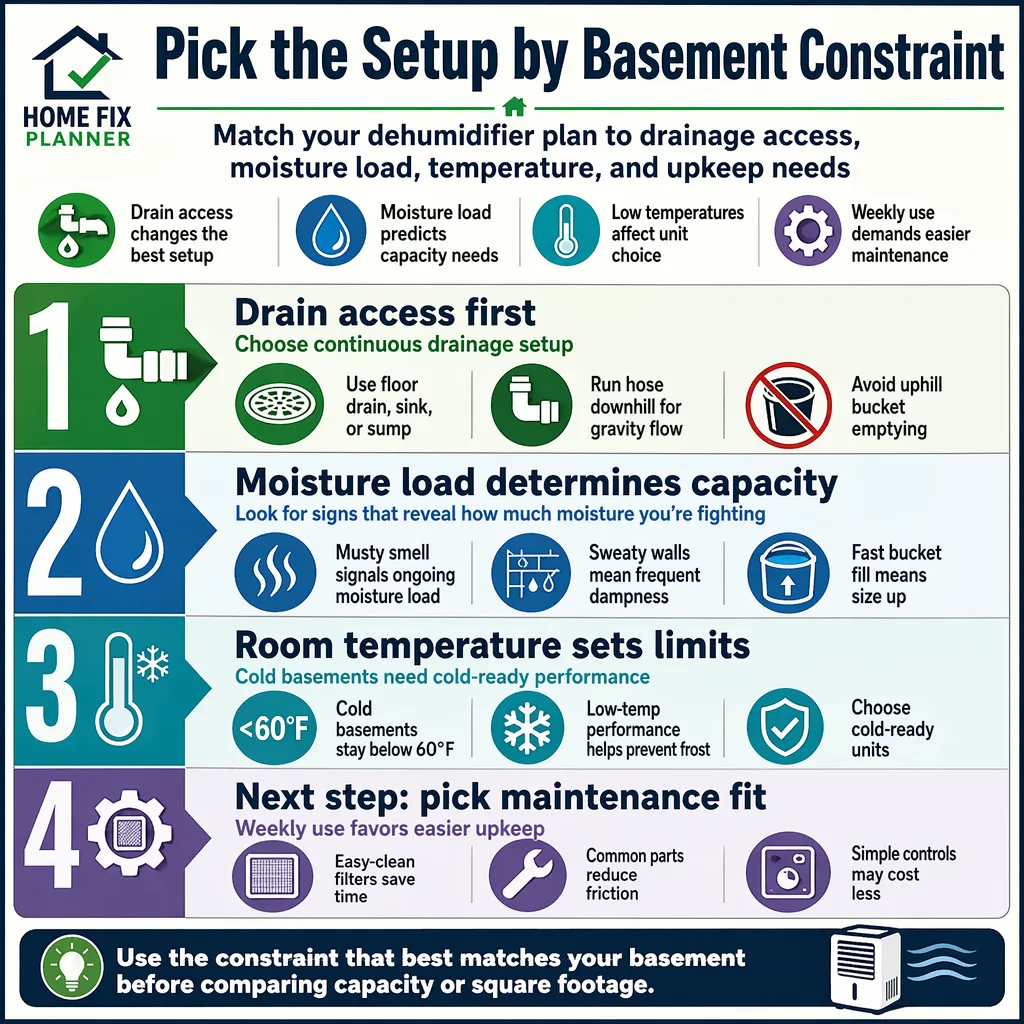
Most guides push square footage first. That is wrong for basements because moisture source and drainage decide how hard the machine works. A 1,000-square-foot basement with a sump and dry walls needs less machine than a 700-square-foot room that sweats after every storm.
A box fan is the simpler alternative, but it only moves air. It does not remove water from the room. If the problem is humidity, airflow alone leaves the basement damp.
The Comparison Points That Actually Matter
The printed pint number matters, but it does not matter first. A basement dehumidifier should be judged by how well it handles the room you own, not the room on the box.
Drain setup beats tank size
A continuous drain removes the most annoying chore in the whole process, emptying the bucket. That convenience only works when the hose has a clean downhill path or a pump that pushes water to the drain point.
A bucket looks simple until it becomes a daily task. For a basement that stays damp, daily bucket duty turns into the reason the machine gets ignored. If you know the space will stay wet, a pump or direct drain pays off fast in labor saved.
Capacity follows the moisture load
The right capacity depends on how hard the basement loads the machine, not just its floor area. A unit with a bigger pint rating clears humidity faster, but it also takes up more room and adds more warm exhaust to the space.
That heat matters. In winter, a little warmth helps. In summer, it turns into another reason the room feels sticky if the unit sits undersized or cycles too hard.
Temperature decides the machine type
Cool basements punish standard compressor units. If the room sits cold for long stretches, look for low-temperature operation or a design built for cooler conditions.
This is where many first-time buyers get burned. They buy by capacity, then discover the unit struggles in a basement that stays chilly against concrete walls. The label did not lie, but the room changed the result.
Controls and parts decide ownership friction
If the unit runs every week, filter access matters more than a fancy display. A washable filter, a simple tank, and replacement parts that are easy to source keep the machine in service.
The parts ecosystem matters here. A common hose connection, a standard filter format, and a replacement pump that does not require a scavenger hunt all cut down on maintenance friction. That is the difference between a tool and clutter.
The Compromise to Understand
The real trade-off is labor versus convenience. Every easier setup adds a little more hardware, and every simpler setup asks for more manual attention.
Bucket-only keeps the setup simple
A bucket-only unit gives you the least setup hassle. It also gives you the most cleanup. If the basement stays lightly damp and someone checks it often, that trade-off works.
For a busier household or a basement that sees repeated moisture, bucket-only becomes a chore. One missed day matters. If the tank fills fast, the convenience disappears.
Pump-and-drain solves the chore, then adds a system
A pump removes the daily bucket duty and makes the machine feel easier to live with. That is the upside.
The downside is that the pump becomes another part to clean, another sound to notice, and another failure point to check. If the route to the drain is awkward, the pump is worth it. If the drain is already easy to reach, the pump adds complexity without much gain.
Bigger units reduce run time, but they also bulk up the room
More capacity changes the experience only when it removes a real pain point. If the basement fills with moisture after storms or stores cardboard, holiday decor, and tools, stepping up capacity makes sense.
Paying more for lights, app control, or decorative trim does not dry the room any better. Paying more for easier drainage, better access, or low-temp readiness changes daily use.
The Next Step After Narrowing Dehumidifier For Basement
Map the water path before the machine lands in the room. That one step decides whether the purchase feels smooth or annoying.
Route the drain first
If the hose drains downhill to a floor drain, sink, or sump, choose continuous drainage. If the water has to travel up, pick a pump. If neither route exists, solve the drainage problem first and buy later.
That rule saves money because it stops the wrong setup from becoming permanent clutter. A dehumidifier that sits near the right spot but drains badly still creates chores.
Place the unit like basement equipment, not living room decor
Give it open air on all sides and keep it off deep carpet or behind storage stacks. The machine needs room to pull in damp air and push dry air back out.
Tucking it into a corner looks neat and works poorly. The unit starts recirculating the same air, and the cleanup path gets harder every time you need to service it.
Build a storage home for the hose, cord, and filter
Basement gear gets used more when teardown takes one trip. Keep the hose, cord, and filter together in one labeled spot so the off-season reset stays simple.
That sounds minor, but storage friction kills follow-through. If the gear is scattered across shelves, the machine feels harder to bring back into service next season.
Upkeep to Plan For
A basement dehumidifier works best when the maintenance is boring and regular. Skip the upkeep, and the machine gets louder, slower, and less pleasant to live with.
Clean the filter during active months. Dust builds up fast in basements, and a dirty filter raises run time while cutting airflow. If the unit lives near a workshop area, laundry zone, or storage shelves, clean it more often.
Rinse the tank and wipe the float area if the machine uses a bucket. That stops slime and smell from taking over the wettest part of the appliance.
Check the hose for kinks, buildup, and loose ends. A clogged line turns a “continuous drain” setup back into a bucket problem. If the unit uses a pump, flush the line and keep the discharge path clear.
Before storage, dry the unit fully and leave the tank area open. Do not box it up wet. That is how the next season starts with a stale smell and a dirty filter.
If the dehumidifier runs every week, parts availability matters. A common filter, an easy-to-find hose, and a replaceable pump save time later. Fancy controls do nothing when a basic maintenance part goes missing.
What to Verify Before Buying
Check the published details that change basement fit. This is where the wrong purchase gets caught before it becomes a return.
- Confirm the drain route and whether the water exits by gravity or needs a pump.
- Measure the basement temperature in the coldest months, not just summer.
- Leave space for intake and exhaust on every side.
- Make sure the cord reaches the outlet without an extension cord crossing a walkway.
- Decide where the unit will sit when it is not in use.
- Check whether replacement filters and hoses are easy to source.
- If the basement is finished, confirm the machine will not block traffic or furniture placement.
Most buyers focus on capacity and ignore drain height. That mistake causes the most frustration. A strong machine with a bad water path behaves like a weak one because the cleanup never ends.
When Another Option Makes More Sense
Skip this category when the basement has active leaks, standing water, or soaked materials that need removal first. A dehumidifier does not fix wet drywall, saturated carpet, or water entering through cracks.
A small fan or moisture absorber belongs in a closet, laundry cabinet, or light-duty storage nook. It does not belong in a damp basement that needs actual moisture removal. That is a common misconception, and it sends people to the wrong shelf.
A cold, unheated storage space also changes the answer. If the room stays below the operating comfort of standard compressor units, a different dehumidifier type or a different moisture-control plan makes more sense.
If no drain path exists and nobody empties a bucket often, do not buy a bucket-only setup. That choice looks cheap on paper and expensive in annoyance.
Final Buying Checklist
Use this as the last pass before you decide.
- Moisture source identified, not guessed
- Drain path confirmed
- Capacity matched to wetness, not just square footage
- Basement temperature checked for cold-weather operation
- Clearance around the unit measured
- Bucket, pump, or hose cleanup plan set
- Filter access reviewed
- Off-season storage spot chosen
- Replacement parts availability checked
- Repair work prioritized if water still gets in
If any one of these fails, fix the constraint first. The cleanest purchase is the one that fits the basement without demanding constant babysitting.
Common Mistakes to Avoid
Buying the biggest label on the shelf is the first bad move. Bigger is not better when the drain path is wrong or the basement only gets mildly damp. Oversized units add bulk and heat without solving the real problem.
Ignoring humidity source is the second bad move. A dehumidifier manages moisture in the air. It does not stop gutters from dumping water at the foundation or cracks from admitting seepage.
Using open windows as a drying strategy in humid weather is another miss. That pulls moisture inside and makes the machine work harder. A basement does not dry out because air is moving. It dries out because water leaves the room.
Putting the unit in a hidden corner is a cleanup mistake, not a styling choice. It blocks airflow, hides maintenance, and turns filter cleaning into a hassle.
Storing the machine wet creates a stale-smelling restart next season. Dry it fully, keep the parts together, and put it away clean.
The Practical Answer
Start with wetness level and drain access, then size the machine. For many damp basements, a 50-pint class dehumidifier with continuous drainage is the cleanest ownership choice. For basements that stay wetter, store boxes, or need less babysitting, the 70-pint class with a pump earns its place.
Choose the simpler bucket setup only when the space stays moderately dry and someone checks it often. Spend extra only when it removes daily cleanup or solves a drain problem. If water still enters the basement, put repair money into the shell first and let the dehumidifier support the fix, not replace it.
Frequently Asked Questions
What size dehumidifier do I need for a basement?
A 50-pint class unit fits many damp basements, and a 70-pint class unit fits basements with recurring moisture, storage loads, or slower drainage. If the bucket fills fast or the room stays muggy after storms, step up.
Is a pump worth it in a basement?
Yes, when the drain sits above the unit or the hose route is awkward. A pump removes daily bucket duty and makes the setup easier to live with. It also adds another part to clean and maintain.
What humidity should a basement stay at?
Aim around 45% to 50% relative humidity. That keeps the room dry without making it feel harsh, and it gives the dehumidifier room to cycle without running flat out.
Can a dehumidifier replace waterproofing?
No. It controls indoor moisture. Gutters, grading, sump work, crack repair, and leak fixes stop the water source.
Should I use a basement dehumidifier in winter?
Use it when humidity stays high, then back off when the room dries and cools. Cold basements reduce the appeal of standard compressor units, so check the operating range before you count on winter use.
Do I need a bucket or a continuous drain?
Continuous drain wins when the basement stays damp and the drain path is easy. A bucket fits lighter use or backup situations. If the tank needs daily emptying, the setup is wrong for the job.
Will a dehumidifier remove musty smells?
Yes, if the smell comes from damp air and stored moisture. It does not fix mold hidden in walls, soaked carpet, or wet insulation. Those need cleanup first.
Can I run a dehumidifier with a fan?
Yes, and that combination helps move drier air around the room. The fan speeds circulation, but the dehumidifier does the actual moisture removal. The fan alone does not dry a basement.
See Also
If you want to move from general advice into actual product choices, start with Humidifier Not Producing Mist: Troubleshooting Steps and What to Fix, What to Look for in a Home Dehumidifier Before You Buy, and How to Choose a Ladder Leveler for Uneven Ground.
For a wider picture after the basics, Shingle Roof vs. Metal Roof Cost: Which Costs More to Install in the Us? and Klein Tools ET310 Review: A No-Nonsense Circuit Breaker Finder are the next places to read.