Start With the Main Constraint
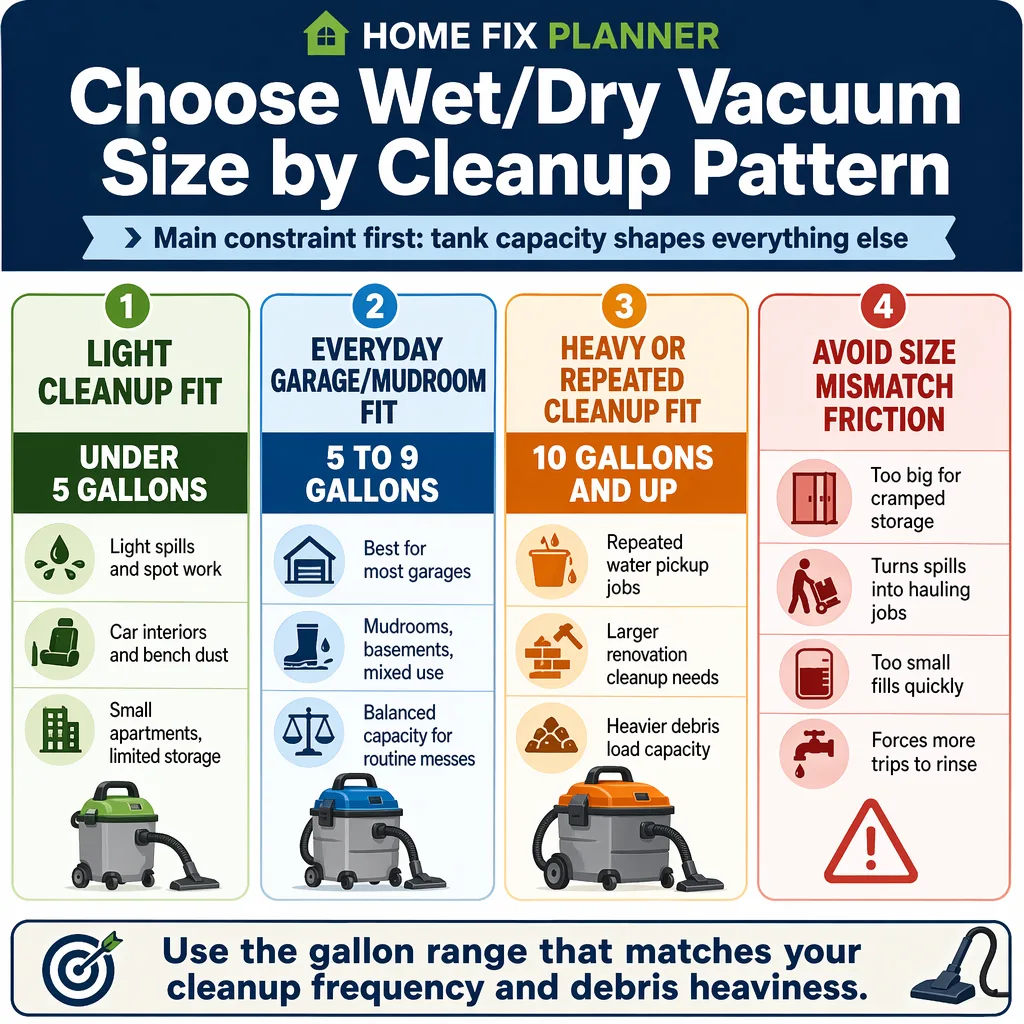
A simple rule of thumb works well:
- Under 5 gallons: best for light spills, car interiors, bench dust, and small apartments with limited storage.
- 5 to 9 gallons: the sweet spot for most garages, mudrooms, basements, and mixed household use.
- 10 gallons and up: right for repeated water pickup, larger renovation cleanup, and heavier debris loads.
The wrong size creates daily friction. A big tank in a cramped closet turns every spill into a hauling job. A tiny tank in a garage fills fast, then sends you back to the sink, hose, or drain before the real cleanup is done.
Storage matters as much as capacity. If the vacuum sits too far from the mess, it stops being a quick tool and becomes a project. For first-time buyers, that is the key failure point.
How to Compare Your Options
Compare the parts that change cleanup friction, not the shiny labels. Most guides push motor talk first. That is wrong because suction strength means little if the hose clogs, the filter loads fast, or the tank is awkward to empty.
| Decision point | What to look for | Best fit signal | Trade-off |
|---|---|---|---|
| Tank size | 2.5 to 4 gallons, 5 to 9 gallons, 10+ gallons | Matches both mess size and storage space | Bigger tanks weigh more when full |
| Hose and tool layout | Wide hose for debris, simple floor tool for wet pickup | Reaches corners without constant moving | Bulkier hoses store less neatly |
| Filter system | Wet-capable setup, easy access, replaceable parts | Quick swap between dry dust and liquid cleanup | More parts to clean and dry |
| Emptying design | Bottom drain, wide opening, or fast-latch tank | Rinses out without tipping drama | More seams and seals to maintain |
| Parts ecosystem | Filters, hoses, bags, and nozzles sold separately | Easy to replace after wear or damage | Ongoing consumable cost |
| Storage footprint | Upright parking, cord wrap, onboard accessory space | Fits the closet, garage wall, or utility corner | Less storage comfort for extra attachments |
A good wet dry vacuum review also asks one simple question: how much cleanup does the cleaner require? If the answer is “a lot,” the tool loses its edge fast. A slightly less powerful machine with easier emptying and a better hose layout often serves homeowners better than a louder unit with more numbers on the box.
What You Give Up Either Way
Choose convenience or capacity, because each one taxes the other. Small machines grab fast and store easily, but they fill up sooner and struggle with bigger garage or basement jobs. Large machines move more debris at once, but they occupy more space and feel like work before the work starts.
The cheaper alternative matters here too. A broom, bucket, and mop beat a wet dry vacuum for a one-off kitchen spill. That setup costs less, stores easier, and cleans up faster when the mess stays on the floor and does not include grit, nails, sawdust, or standing water.
Bagged and bagless setups split the same way. Bagged systems contain fine dust better and keep the tank cleaner, but they add a consumable and one more thing to track. Bagless systems save that step, then ask more of the filter and the rinse routine. If drywall dust is part of the plan, containment matters more than saving a few cleanup steps.
The Use-Case Map
Map the vacuum to the room before you buy. A wet dry vacuum that fits one job perfectly often feels clumsy in another.
Kitchen and laundry spills
A compact unit works only if it lives close enough to grab fast. If it sits in a garage across the house, a mop still wins on speed. The drawback is obvious: a larger machine adds no real value for occasional puddles on tile.
Garage dust and small debris
A 5 to 9 gallon unit handles most garage cleanup, from sawdust to tracked-in dirt. Wide hose paths and simple floor tools matter more here than flashy features. The trade-off is noise and bulk, which matter when the garage shares space with cars, bikes, and storage bins.
Basement water and utility rooms
This is where capacity pays off. A larger tank reduces dump trips when the job involves repeated water pickup. The cost is weight, especially on stairs, and a full tank turns into a load fast.
Remodel dust and drywall cleanup
Fine dust is the stress test. It loads filters, coats the tank, and leaves behind a mess that smells wrong if it stays damp. A wet dry vacuum that handles drywall work needs easy filter access and a cleanup routine you will actually follow.
Car mats and cargo areas
A smaller or mid-size unit fits this job better than a giant one. The hose and crevice tools matter more than tank size here. The drawback is that a bulky utility vacuum steals garage floor space for a job that only happens now and then.
Maintenance and Upkeep Considerations
Plan for rinse time, dry time, and filter cleaning before you buy. That is where ownership friction lives.
Wet cleanup leaves residue on tank walls, seals, and hoses. Fine dust mixed with moisture turns into sludge, and sludge creates odor fast. If the filter goes back into a closed tank while damp, the smell shows up quickly and the machine becomes harder to reach for the next job.
Simple upkeep keeps the tool ready:
- Empty the tank right after wet pickup.
- Rinse the interior before residue dries.
- Dry the filter fully before storage.
- Clear the hose after dusty jobs.
- Check seals, latches, and casters so the unit moves cleanly.
Weekly use raises the bar. A vacuum that needs a long teardown after every session loses its advantage. Parts sold separately matter here too, because a cracked hose or worn filter should not force a full replacement.
Constraints You Should Check
Verify the wet-dry conversion details and accessory sizes before checkout. That is where a lot of bad buys hide.
Check these published details:
- Wet pickup setup: confirm what filter stays in place and what gets removed.
- Dry dust handling: look for fine-dust support if drywall, ash, or sanding residue is part of the plan.
- Drain path: a wide opening or bottom drain beats tipping a heavy tank.
- Accessory compatibility: hose and nozzle sizes matter if replacement parts enter the picture later.
- Storage geometry: measure the spot where the vacuum will live, not the floor space in the aisle.
- Reach: hose and cord reach should cover the farthest cleanup without constant unplugging.
The published details rarely say how annoying a tank is to wash after sludgy cleanup. That is the real ownership question. A wide opening, simple internal shape, and straightforward drain path beat clever extras when the mess is nasty.
Where This Does Not Fit
Skip a wet dry vacuum when the mess stays small, dry, and easy to wipe. A regular vacuum, broom, mop, and bucket still win for daily crumbs, light floor dust, and tiny kitchen spills.
It also misses for buyers with almost no storage or a hard noise limit. These machines are louder and bulkier than standard home vacuums, and that matters in apartments, shared laundry rooms, and houses where the garage sits close to living space. If the tool takes too long to pull out, it stops being a first-choice cleaner.
The Next Step After Narrowing Wet Dry Vacuum
After size and job mix, the next filter is the parts ecosystem. That is the difference between a tool that stays useful and a tool that turns into a dead end.
Look for common replacement filters, hoses, and nozzles. Easy-to-find parts keep weekly use simple, especially when a hose gets cracked or a filter gets clogged with fine dust. A unit with a good floor tool, crevice tool, and wet pickup head also saves time because you stop improvising with the wrong attachment.
This is where ownership friction shows up in plain sight. The best setup is not the one with the most clever extras. It is the one that keeps the machine ready in the garage, basement, or utility corner without a pile of special parts attached to it.
Fast Buyer Checklist
Use this before you commit:
- The tank size matches the mess and the storage slot.
- The hose and cord reach the farthest cleanup without repeated unplugging.
- The filter setup matches both dry dust and wet pickup needs.
- Emptying and rinsing take minutes, not half an hour.
- Replacement filters and hoses are easy to source.
- The machine fits the way the space actually works, not the way the box pictures it.
If two or more of those answers are no, keep looking.
Avoid These Wrong Turns
Stop these mistakes before they turn into clutter.
- Buying for suction talk and ignoring emptying speed.
- Oversizing for a rare flood and living with the bulk all year.
- Using the wrong filter on drywall dust.
- Forgetting that hose storage and cord wrap affect daily use.
- Treating a wet dry vacuum as a replacement for a mop or regular floor vacuum.
The most common bad buy is the one that needs extra setup for every small mess. If the tool takes longer to prep than to use, it will sit idle.
The Practical Answer
Most homeowners land on a 5 to 9 gallon wet dry vacuum with easy filter access, straightforward emptying, and common replacement parts. That range gives enough capacity for garage grime, basement cleanup, and weekend project debris without turning storage into a burden.
Go smaller only for tight spaces and light spills. Go larger only when repeated water pickup or renovation debris justifies the bulk. If the job is mostly crumbs and dust, a broom, mop, or regular vacuum still wins on speed and simplicity.
Frequently Asked Questions
What tank size works for most homeowners?
A 5 to 9 gallon tank fits most mixed household cleanup. It handles garage dust, small wet messes, and light project debris without demanding a huge storage area.
Is bagged or bagless better?
Bagged works better for fine dust and cleaner disposal. Bagless cuts out a consumable, but it adds more filter cleaning and more residue inside the tank.
What matters more, suction or hose size?
Hose design and filter access matter first. A strong motor loses value fast if the hose clogs or the filter loads after one job.
Can a wet dry vacuum replace my regular vacuum?
No. A wet dry vacuum handles spills, grit, and renovation debris better. A regular vacuum handles everyday floor dust and quick pickups with less setup and less noise.
How often should I clean the filter?
Clean it after dusty jobs and always before long storage. If the filter stays damp or packed with fine dust, the machine smells worse and performs worse on the next cleanup.
Do I need a wet dry vacuum for a garage?
Yes, if the garage sees sawdust, mud, spilled water, pet hair, or tracked-in grit. No, if the space only needs the occasional dust sweep and nothing else.
What is the biggest mistake first-time buyers make?
Buying a machine that is too big, too loud, or too awkward to store. The right vacuum gets used because it is easy to grab, empty, and put away.
See Also
If you want to move from general advice into actual product choices, start with Karcher Wet-Dry Vacuum Review, Bissell Multiclean Wet Dry Vacuum Review: What to Know Before You Buy, and Pole Saws for Homeowners: What to Check Before You Buy for Safe, Low-Cost Yard Care.
For a wider picture after the basics, Gas Water Heater vs Electric Water Heater: Repair Costs and Maintenance Comparison and Klein Tools ET310 Review: A No-Nonsense Circuit Breaker Finder are the next places to read.